

Print publications, as you are surely aware, are in big trouble. Yesterday The Washington Post laid off one-third of its news staff, leading to sentence fragments such as “Crypto-fascist President Donald Trump today . . .”
To read the remaining twenty-eight words, you have to pay an “upcharge” to get around a “paywall” in order to add to the wealth of Jeff Bezos, the owner of the paper, who is only worth $244.4 billion and would like to round up to $244.5.
It’s easy to wax sentimental about newspapers, which are so cherished in American history that they are protected by the First Amendment to the U.S. Constitution–as long as they don’t engage in libel, obscenity, copyright infringement and six other exceptions that limited space on the World Wide Web prevent me from discussing at length. I’ve worked at two newspapers for little pay, and written for others on a free-lance basis for even less, so forgive me if I give them the same hard-headed treatment they’re supposed to give politicians. I have what the constitutional lawyers call a “bright-line” test; if a newspaper ever turned down a “pitch” of mine, they deserve to fail.

The Post fits this description, because they rejected a story of mine back in the late 1970s, when I lived in Arlington, Virginia, and Washington, D.C. was without a baseball team, having been abandoned by two iterations of the Senators, one to Minnesota, the other to Texas. I proposed a bunch of tongue-in-cheek mascots back in the self-addressed stamped envelope days, so it took several months for me to receive the Post’s no-thank-you, by which time I had moved back to Massachusetts.
You didn’t have to be a Nostradamus to see this denouement coming, but people kept right on applying to journalism schools and applying for jobs with newspapers, all the while looking straight ahead to ignore the warning signs that began to accumulate over the years. Those of us who got out early are like William Shatner in the Twilight Zone episode “Nightmare at 20,000 Feet,” the only passenger who can see the gremlin out on the wing of the plummeting plane. (Full disclosure, as serious journo-heads like to indulge in: The mascot of my grade school basketball team was the Gremlins.)

“For God’s sake, take my complimentary bag of peanuts and go away!”
You, of course, sitting there in front of the computer, are part of the problem. You’ve apparently decided that you’re tired of reading the same story about tattooed professional women three times in the past eighteen months, in each case with fewer sources or statistics than before. Funny, the female accountants, lawyers and MBAs I meet tend not to have “Oakridge Road, Wellesley MA 02481″ scrawled on their necks, a reminder of “where they came from” as one NBA player said of his return-address neck tat the other day.
Instead, you get your news on-line, where you can always click on a highlighted link and watch cat videos or two guys dropping candy into Diet Coke bottles when you get bored with the two-civic leader thumbsuckers that the Globe likes to run on its op-ed page.
My career as a journalist began in high school, when a cracked vertebra tragically brought my career as tight end-middle linebacker to a premature conclusion. I wrote for free back then, so to me writing on the internet is like coming home for Christmas.

Three chairs, no waiting.
But I can’t imagine a world without print. There are some places where you just can’t go–at least not yet–with a laptop. This week I got a haircut and was trying to imagine what a normal colloquy with my barber would be like if newspapers and magazines ceased to exist:
BARBER: Canna you tilta your heada justa little?
ME: Sorry, I was doing a site search for “lacrosse” and “whatever happened to the Boston Blazers.”
BARBER: Why donta you justa reada the sportsa page or Sportsa Illustrateda? Thatta way I don’ta get little hairs in your computer when I blow dry.
ME: Enzo–print–it dies.
BARBER: Oh–too bad. You want gel on that?

But I for one am not going to stand idly by while a way of life comes to an end. What follows is my guerilla plan to save print through hand-to-hand combat that you, dear reader, can join in anytime you want.
Buy two copies, throw one away. During the first Reagan administration humorist Roy Blount, Jr. suggested that we reduce the national debt by buying postage stamps and throwing them away. Maybe, just maybe, if writers bought two copies of every newspaper or magazine they wanted and threw one away, we could save print. Of course Blount’s plan didn’t work, but that was before there was the internet to spread the word. If you wanted to read Blount back then you had to buy Esquire, or one of his books. Not any more. Now you just log on to the internet, type his name into your search engine and . . . never mind.

Pets. Pets are one of the key demographics that publishers neglected when advertising revenues were strong and things didn’t look so grim. Try lining your parakeet’s cage with a laptop, or house-breaking your Portugese Water Dog using a Kindle, Amazon’s wireless reading device–it’s a mess! You’ll be begging the nice telemarketer from The New York Times for a two-week free home delivery trial the next time she calls.
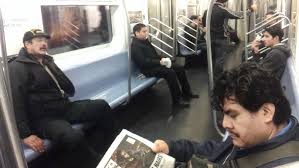
Diminished civility. Next time somebody at the soup ‘n salad place where you eat lunch asks if he can borrow your paper when you’re through with it, just say no. As you make your way out of your commuter train in the morning, pick up the discarded papers that other riders have left behind and throw them away.
If somebody complains, tell them if they want to read for free they can buy a laptop, which is way more expensive.
Just Yesterday my wife and I discussed starting a local newspaper to replace the one that a larger paper bought out (and then fired me from). We both agreed we were insane for even talking about it.
Google Nantucket newspaper, there is a new one on that island started by a guy named Bruce Percelay, apparently doing well. Of course they have a captive upscale nosy readership hungry for gossip about their neighbors.
That said, you’d still be insane. I sat next to a guy at a dinner in St. Louis, talked about trying to revive the Globe-Democrat, which my mother preferred to the Post-Dispatch. He said, “If you do, be sure to bring $150 million with you. The last guy who tried only had $100 million and couldn’t make a go of it.”