

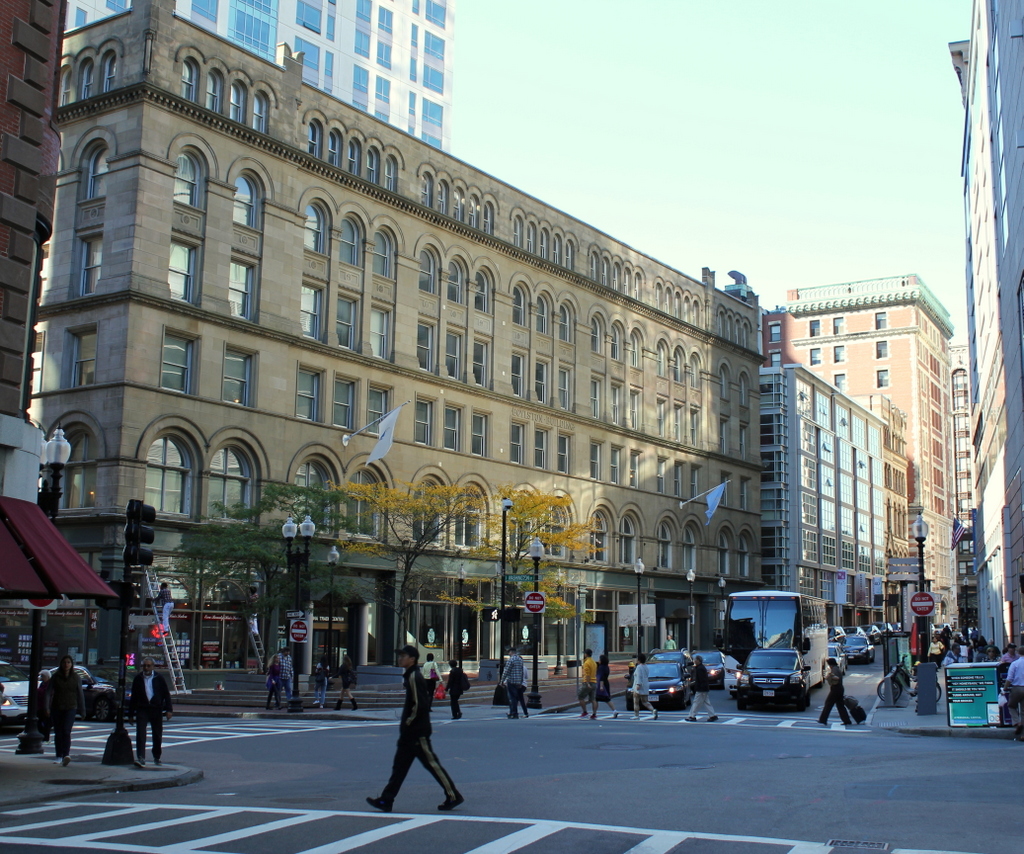
It’s fall, which means that people who are fortunate enough to take summer vacations are back in Boston, eyes-bright-and-coats-shiny like golden retrievers in dog food commercials. They’re tanned, rested and ready to take on the world, or the relatively thin slice of it that is the 617 area code. The temperatures are cooler; people who scurried to the comfort of air conditioning last month like box turtles in a damp basement are out and about, boulevardiers off their derrieres. It’s a time of re-birth, and yet there’s an unmistakable scent of failure in the air as I walk down . . . The Boulevard of Broken Memoirs.
I recognize the haunted looks in the eyes of those who have fallen–or been pushed, or kicked–off the middling mountains whose summits they once commanded. As they fell, they uniformly told the press in Boston that they were going to write their memoirs. And yet I see them–five, ten, twenty years or more later–with nothing to show for it.
There’s Walter, the Captain of Finance who walked the bridge of the big bank where my wife worked as it slowly sank beneath the waves of the Atlantic. A hero to the biz press on the way up, he was roundly condemned on his way down by 20-20 hindsight reporters and columnists who thought he was a financial genius not long before. The strategy that had seemed so brilliant as the bank grew beyond the borders of the Bay State suddenly seemed not so bright when federal banking officials arrived in town, all with Texas accents, to round up the misbegotten cattle he’d raised and ship them off to the slaughterhouse. Walter retired to Osterville on the Cape–a town so quiet that the 24-hour store closes at 8 p.m. Surely with that depth of solitude in which to reflect he should have cranked out something, but I don’t recall seeing any Lee Iacocca-type biz book about him on the shelves. As I walk down Boylston Street I see him and call out to greet him.

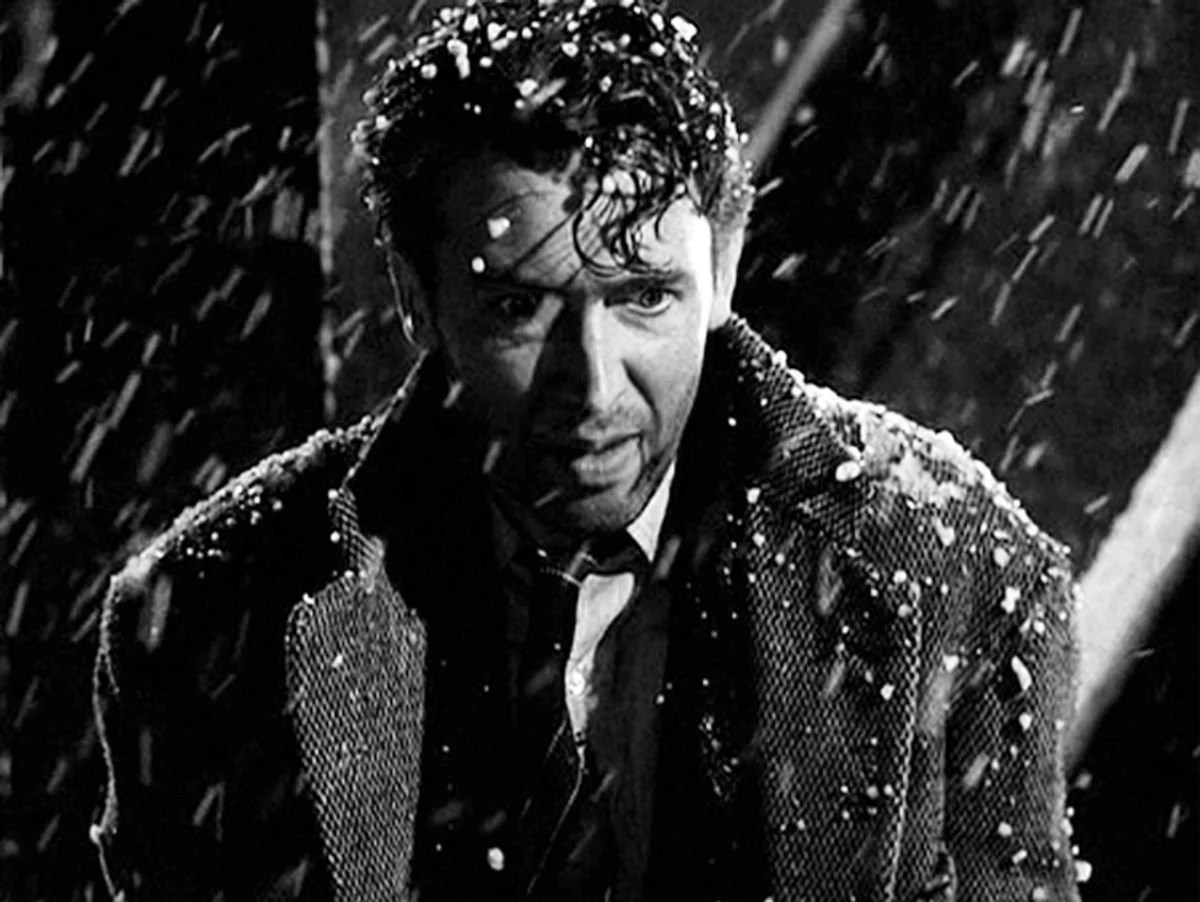
“Hey Walt, you may not remember me, but you grabbed a VHS tape of It’s a Wonderful Life out of my hands at the bank’s Yankee Gift Swap back in the 80’s.”
“Huh?” he replies, not experiencing the Shock of Recognition that shook Herman Melville when he met Nathaniel Hawthorne.
“New England Middle Market Group Holiday Party? 1984, 85, some time around then?”
“Oh, sure, sure,” he says, doing a passable job of faking it. “How’re you doing?”
“Fine, fine, can’t complain,” I say. “How about you–how’s that memoir coming?”
“Eh?” he say, rocked back by that jab to his ego.
“You told a reporter for The Boston Globe that you were going to retire and write a memoir, set the record straight and all that.”
“I guess you’re right, I did.”
“And?”
“Well, I grabbed a couple legal pads from the bank before the FDIC marched me out the door. I took some notes–I’ve still got them somewhere.”
“It’s not as easy as it sounds, is it, this book-writing dodge?”
“I guess not, since here we are four decades later and I still haven’t done it.”
“You should maybe hire a ghost writer. The world . . . or some small portion of it . . . is surely waiting with bated breath to hear the tale of the biggest bank crash in American history.”
“Actually, it was only the third biggest at the time.”
“There’s the rub,” I said.
“Where?” he replied, looking around him.
“No, I mean, that’s your problem, and that’s our problem in New England. We think we’re a big deal, but we’re small potatoes compared to New York and Texas.”
“I suppose that’s a good thing in my case.”
“You betcha,” I said. “If you want to get that book finished, you should go out and drive a much bigger bank to an early grave.”
“Maybe you’re right.”
“Well, just my opinion. Anyway, great seeing you and . . . happy writing!”
“Same to you.”

I exhale with satisfaction at my little accomplishment. I try to do what I can to help blocked memoir writers, since I seem to suffer from the opposite affliction; nothing accomplished I can “memoir” about, and yet I can’t seem to shut up when I sit down at the keyboard.
I start to cross the street against the light–Boston is The Jaywalking Capital of the World, you know–when who do I spy on the opposite curb but a guy whose name you would have recognized ten years ago, but who has now fallen into obscurity. He was head of a major arts organization until . . . something happened, it was never quite clear what. Did he debauch one too many young females–or males? Did the Board of Overseers catch wind of it? I tried to read between the lines at the time, but all I could discover was that (of course) he was retiring so he could write his memoirs!
“Bruce!” I call out. When he hears his name he looks at me and again–for some reason–he can’t place me.
“How’re you doing?” I say when we meet on his side of the street.
“Fine, uh, I, uh . . .”
I sense his difficulty; he’s been so busy writing his memoirs, he’s forgotten who I am.
“The 1991 fund-raising gala? I was at a table purchased by one of our much wealthier friends, and you came around to thank us all for supporting the arts.”
“Yes, now I . . . seem to recall. How are you?”
“Fine but more importantly–how are you? How is . . . or are . . . your memoirs doing?”
“Huh?”
“When you left you told the arts reporter that you were retiring to write your memoirs. Surely they must have been published by now!”
“Well, uh, I actually . . .”
“I know, it’s hard. In fifth grade I had writer’s block trying to write ‘So Far, So Good,’ my life story up to that point. But I toughed it out even though I had both long division to master and was drafted to run for class president.”
“Gosh, that’s . . . inspirational. Maybe if I just buckled down . . .”
“Sure, sure. Sharpen your pencils, line them up straight on your desk, and in no time–say, another thirty-five years–you’ll have written the best darn memoir any former arts big wheel ever wrote!”