

I’m sitting having a cream soda at Max’s Deli in Brookline, Mass., waiting for Sir Walter Scott, my fellow philo-semite–and try saying that five times fast–to arrive. I’m usually very impatient when people hold me up like this, but for Walt I’ll make an exception. After all, he’s got to time-travel 193 years, and the traffic on Comm Ave is brutal at this time of day.
Sir Walter Scott: Received Goy of the Century Award from Edinburgh B’nai B’rith
He walks in, his mane of silver hair a bit disheveled from the blustering wind, and I give him the hi sign–flapping one hand under my chin the way the Little Rascals used to do.
“Sorry I’m late,” he says as he approaches the table, and the sight of the guy who practically invented the novel draws more than a few stares.

Little Rascals’ “hi sign.”
“Not to worry,” I say, and realize my use of a typically Jewish phrase may strike some within earshot as odd, seeing as how like Scott I’m blondish, half WASP/half decaf Catholic, but that’s the way I roll; three years in Brookline, four years in Hyde Park, Chicago, before then. I’m circumcised, I’ve been to a Chinese seder, a bris and too many bar mitzvahs to count. I’ve got the kosher dietary laws pretty much down pat, and the first poem I ever wrote–Thoughts on Waking After Spending the Night at a Kosher-Vegetarian Commune–was selected best Jewish Poem by a Goy in 1974. You may remember its stirring lines:
This is kosher, this is trayfe,
One unclean, the other safe.
All day long we work and slayfe,
Keeping kosher from the trayfe.
True, I’m not in Scott’s league when it comes to philosemitism, but then again he’s the master; the guy who got down on paper the greatest love story between a Jewish heroine, the beautiful Rebecca, and a goyishe hero, Ivanhoe, a Saxon Crusader who just flew in from the Holy Land, and boy was his horse tired.
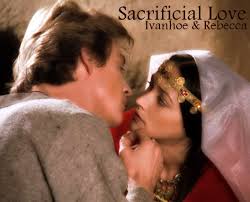
“What do you recommend?” he asks me when the waiter appears, and I say everything’s good but the corned beef is terrific. “Okay, I’ll have the corned beef on rye with mayo.”
I cover my eyes at his bonehead mistake. “Walt–you just pulled a John Lindsay.”
“Who’s John Lindsay?”
“The guy who ran for mayor of New York and ordered a hot dog and a glass of milk at a Brooklyn deli.”

Lindsay: “Okay–how about a Coke then?”
Dawn breaks on marblehead, as we say here in Massachusetts, and Scott changes his order. “I meant mustard,” he says, “and a celery soda.”
“You got it,” the waiter says as he tears off the tab and lays it on the table.
“So what’s it like, living in the 21st century?” Scott asks.
“Actually, I lived here in the 20th. Right around the corner in a rent-controlled apartment.”
“Nice neighborhood.”
“I know, that was the attraction. One block north is the Allston-Brighton student ghetto– bottles and cans in the streets, shootings, hold-ups. Here it’s the Promised Land.”
“Funny how that works out, isn’t it.”
“Yeah. Still, I encountered a lot of anti-philosemitism.”
“From goys?“
“No, from Jews. People who thought Israel ought to give land back to the Arabs.”
“You don’t?”
“Nope,” I say decisively, and as I look around I see more than a few raised eyebrows. “I take the former middle linebacker’s attitude towards war.”
“Which is?”
“You throw a bomb at me, I intercept it, I get to advance the ball until you stop me.”
“I think an interception’s the most thrilling play in football,” Scott says, growing wistful. “Remember Roger Wehrli?”
“Are you kidding? University of Missouri, St. Louis Cardinals, Pro Football Hall of Fame, next-to-the-next-to-the-last of the great white cornerbacks?”
“Who was the next-to-the-last?”
“Jason Sehorn.”
“Oh, right. Wehrli was something, wasn’t he?”
“Yeah.”
“And who was the last?”
“Cooper DeJean.”

“Right.”
“Anyway, I don’t know if it’s because I grew up in the Bible Belt or what, but I was always sort of . . . Churchillian when it came to Israel.”
“More Zionist than the reform rabbi?”
“You got it. Not that I didn’t encounter a fair amount of hostility when I first moved into a Jewish neighborhood.”
“Why was that?”
“I revealed–stupidly in retrospect–that I’d been raised a Catholic.”
“What’s the matter with that?”
“This is going to hurt you more than it hurts me.”
“I don’t know,” I said as I looked nervously around the room. “Some lingering bad feelings about the Spanish Inquisition I guess. You know Noam Chomsky?”
“No–who’s he?”
“He’s the linguist with the gift of making the self-evident impenetrable.”
“After my time I guess.”
“So a priest and a rabbi pull into a Citgo station . . .”
“He’s Hugo Chavez’s favorite Jewish author. Says he grew up with a visceral fear of Catholics. I think it may have colored some of his later more wacked-out writings.”
“Different strokes for different folks,” Scott says–he’s a big Sly & the Family Stone fan. “So–did you find your Rebecca there?”
“Oh man,” I say. “In spades. A Barbra Streisand look-alike who worked the same shift as me at the faculty club, her two greatest hits bouncing beneath her waitress uniform.”
“And did you . . . get to know each other in the Biblical sense?”
Boaz and Ruth: “You want to come over to my place and listen to Carole King records?”
I shook my head ruefully. “I couldn’t pull the trigger. It wasn’t until many years later that I had the first of several . . . uh . . . ecumenical relationships.”
“And . . . were they good?”
“Like bottled dynamite,” I said, borrowing a phrase used by a woman who played Ruth to my Boaz. “Like throwing sodium into a pond.”
“What happens when you do that?”
“You get a big explosion.”
“You were never involved in anything like that, were you?”
“Or course I was. It was the 70′s–I was young and foolish and friends with a bunch of chemistry majors in Worcester, Mass. What was I supposed to do?”
I had him there. “But when it came time to get married . . .”
“I returned to my home gene pool,” I said.
I could tell from the askant glances I saw on more than a few faces that my story held some interest for my fellow diners.
“And why was that?”
“The cultural differences. After we’d been going out for a few months, there’d be a horrible scene.”
“Like what?”
“The woman would break down crying, and it was always the same complaint. ‘I can’t stand the long, uncomfortable silences with you!’”
“And what was your response?”
“Always the same: ‘What long, uncomfortable silences?’”
Calvin Coolidge
“Ah,” he said, and heads began to nod at the tables around us. “The Tradition of WASP Taciturnity personified by Calvin Coolidge, the greatest Republican president ever produced by Massachusetts.”
“And the only one,” I add.
“Who famously responded ‘You lose’ to a reporter who told him he’d bet his editor he could get the President to say three words.”
I allow myself a glance around the restaurant and see looks of sadness, a pervasive sense of loss at what might have come from such a union. Perhaps another idiotic Jewish-Catholic loudmouth like Bill Maher, or a self-flagellating philosopherette like Simone Weil.
“Well, this has all been very entertaining,” Scott says as he wipes his mouth with a napkin, “but what exactly did you call me back from the sleep of the dead to talk to me about?”
“I’ve got a bone to pick with you, pal,” I say, and while I’m trying to remain pleasant, I make a point of getting an edge into my voice.
“What? What did I do?” Scott asks, shrugging his shoulders like a Catskills comic.
“You–you with the tradition of philosemitism in literature that you started?”
“Yes?” he asks quizzically, and I can tell that others around us are just as befuddled as he is.
“You’re responsible, in some small way, however attenuated and indirect . . .”
“For what?”
“‘The Way We Were.”