

LONE JACK, Mo. In this tiny town southeast of Kansas City, farming is a way of life, and magazine publishing isn’t.
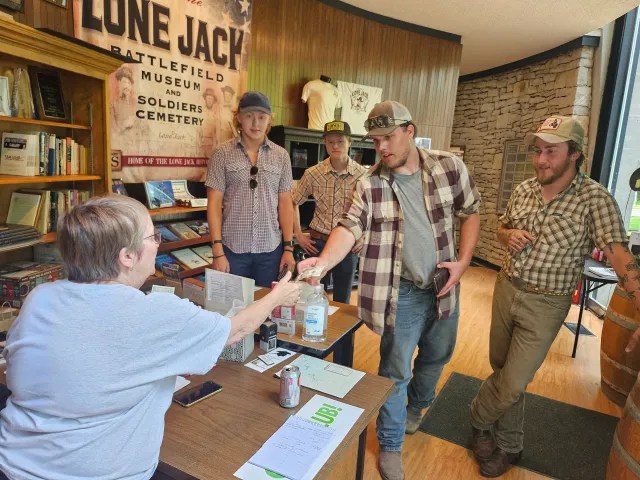
Lone Jack, Mo.
“There’s ‘Full Cry Magazine’,” a monthly devoted to coon and tree-hound hunting, says local farm implement dealer Bill Suggins, “but their offices are in Sedalia,” a county seat over fifty miles away.
Quechee, Vermont, by contrast, is a rural retreat for New Yorkers where, in the words of local restaurant owner Cy Zuckerman, “you can’t throw a quiche without hitting an editor,” and farms are less useful than decorative, a scenic backdrop to getaway weekends for the wealthy and the fashionable. “I sold a women six bales of dill and cilantro to feed to her cattle because she didn’t like the smell of their manure,” Zuckerman says.

“The 2026 Tractors are Here, and We’ve Got ’em!”
But the two towns will have something in common besides the good earth beginning next month when Ruralpolitan, a lifestyle magazine for “real farm women” makes its debut on newstands already crowded with glossy periodicals aimed at female consumers.

Must pass a place twice to make a shadow.
“I decided there was an unmet need out there, and I was the one to fill it,” says Wanda Jean Peters, a former high school yearbook editor who came into money when her husband Donnie fell into a pit at the local grain elevator and was processed into a bag of grass seed. “He’s part of somebody’s lawn somewhere,” she says as she chokes back a sob. “He was good to me while he was living, and since he had a lot of life insurance, he’s been good to me now that he’s dead.”
Wanda Jean’s mission is to produce a magazine that will provide her girls, Tami Marie and Tiffany Sue, with positive images of women and appropriate role models, unlike the see-through fashion models who populate Blase, the slick fashion magazine edited by Dianne von de Velde, a long-time Quechee resident. “Some of them girls are so skinny they have to pass a place twice to make a shadow,” Wanda Jean says scornfully.

“Celery stalk? No thanks, I had one last year.”
Despite the contempt she feels for big-city fashion rags, Wanda Jean borrows liberally from the pages of Blase as she prepares to go to press with the maiden issue of Ruralpolitan. “They got some good ideas in there,” she says as she brushes a wisp of hair out of her eyes with the back of her hand. “They just need to focus on real women, not Barbie dolls.”

Let’s go to press!
Wanda Jean is surrounded by story layouts at her makeshift production facility in a converted barn, and the magazine begins to take shape before her. She reviews “Timothy, Lespedeza or Fescue? They’re All Good!”, a collection of summer salad recipes for grazing livestock, then checks to make sure she has the measurements right. “‘Take one acre of pasture, add twenty bushels of carrots, toss liberally’–that sounds about right,” she proclaims with satisfaction.

Who will be Miss Teenage Sorghum of 2026?
Like upscale urban fashion magazines, Ruralpolitan will offer diet and dating tips to calm its readers’ sensitivities about their appearance. “Thirty Days to More Powerful Thighs!” reads the headline on one mock-up, and Wanda Jean takes an angry blue pencil to its opening line–“Your thighs are more than just a great place to store fat!” “I think we can come up with something a bit more au poivre than that,” she says to Amy Winsatz, an intern from the University of Missouri’s School of Journalism.
The phone rings and it is a stringer–a part-time reporter–on the phone with news from various produce-related beauty pageants. “Okay,” Wanda says. “Let me get some paper to write this down.” Winsatz hands her editor a pad, and Wanda Jean scribbles away as she records the results. “Miss Switchgrass–Nae Ann Othmer. Miss Winter Wheat–Connie Sue Lattimore.” Her voice trails off as she listens to the rumors behind the headlines that will make her readers feel as if they were really there when Miss Teenage Sorghum of 2010 was crowned.
The final product is a countrified knock-off of Blase, duplicating typefaces, features and monthly departments, in each case with a rural emphasis that would be lost on Dianne von de Velde, even though she receives over $20,000 a year in farm subsidies for keeping her fields idle under various federal crop-support programs. Does the fashionable editor feel inclined to sue for trademark or copyright infringement, she is asked. “I speak to our lawyers,” she says in the halting English she picked up at several exclusive European private schools she attended as a girl. “They says to me ‘If you sue, you must go to this Lone Jack where there is not a vanilla latte in a country mile,’ so I am saying to them ‘Never the mind.'”