

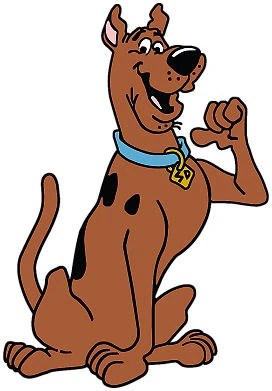
FREEDONIA, New York. The first time 11-year-old Zleena Dzkbzi heard the term “Ru-Ros,” shouted after him as he passed a gang of tough Freedonian boys on his way home from school, his mother told him it was a catch phrase from the Scooby-Doo cartoon series. “It is compliment,” Elenia Dzkbzi said to him. “Like us, the dog cannot speak good English, and so that is what it sounds like when he tries to say ‘uh oh.'”
But the true meaning of the term–an ethnic slur against Ruritanians–became clear to Zleena the next day when the gang pounced on him and used a variety of traditional youth torture techniques, ranging from “noogies” up to and “Indian sunburn,” but stopping short of an “Atomic wedgie.” “Thank God they did not go to that length,” says Milton Sarlett, Assistant Chairman of the New York Department of Low-Level Nuclear Waste. “It could have unleashed World War whatever it is we are up to now.”
Called on the carpet by Norman Byrum, Assistant Principal of Schuyler Colfax Elementary School, the parents of the Freedonian boys were unrepentant. “I am not prejudiced against Ruritanians,” said Wandalla Vlebonia. “They are just dirty, lazy, disgusting, ignorant–did I say ‘lazy’ already?–pigs.”
“That is unfair,” says her friend Novgrz Schzlienki, chiming in. “To pigs.”

Ruritanian bride gets ready to become a virgin again.
The Freedonian mothers burst out in laughter, causing Byrum to call for order. “Please–we are trying to create a welcoming, inclusive, diverse and tolerant environment for all races and ethnic groups here,” he says.
“This is good,” Vlebonia says. “As long as you leave out the ‘Ru-ros.'”
Conflicts between American immigrants from Freedonia and Ruritania have increased as emigres from the latter fictional country are catching up with the former in settling here, where they can escape tariffs on flax, cardamom, and other agricultural products that are central to their diet and cosmology. “We work hard to succeed against many obstacles,” says Ruritanian-American Dzkbzi. “Then these sons-of-lizards just happened to come and live four-to-a-room before us, stealing all the high-paying grease trap cleaning jobs before we had a chance.”

Tensions between Ruritania and Freedonia date back to the Franco-Prussian War of 1870, when due to an early variant of Daylight Savings Time the Freedonian army moved their clocks ahead by one hour and launched an attack on Ruritanian soldiers who had been told the agreed start-time of a “set battle” was 9:00 a.m. “My great-great-great-great grandfather, he die because of Freedonian perfidy,” says Elenia Dzkbzi. “I will not let them take my son as well, unless they are willing to pay customary adoption fee of 20,000 zloties,” Ruritania’s donut-backed currency.

Given this hidebound prejudice going back generations, it is not surprising to hear the Freedonian-American women mutter “There goes the neighborhood” as a moving van stuffed to bursting pulls up with the rag-tag possessions of a young Ruritanian couple who have moved here in search of a better life, or at least one that is more fulfilling than the one they lived between the covers of Anthony Hope’s “The Prisoner of Zenda.” “It was so stifling,” says Dzkbzi. “My ancestors were stuck between pages 120 and 121, with no hope of ever making it to 122.”
Available in Kindle format on amazon.com as part of the collection “Hail Freedonia: A Salute to the World’s Most Powerful Fictional Nation.”